Parallel machines and load sharing
Two machines on one bus only work together if they behave the same way. Load that does not share properly is felt as a fault long before it becomes one.
How the machine is configured against this condition
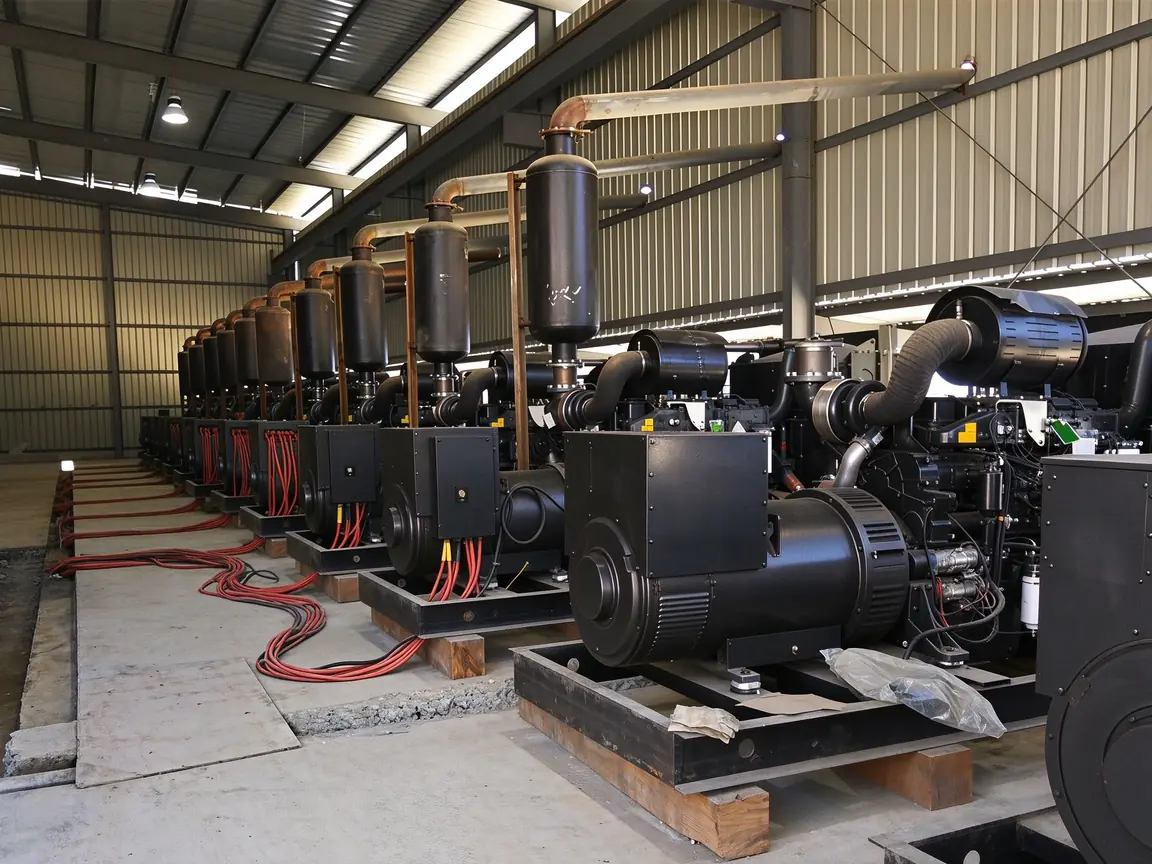
| English name | Multi-Unit Parallel and Load Sharing |
|---|---|
| Core problem | When several machines run in parallel and their synchronising performance is not good enough, the load is shared unevenly and circulating current appears. The machines disturb each other, and in the worst case they trip in sequence, which takes the whole plant out. |
| Solution | The excitation and regulation characteristics are matched so that every machine has the same voltage and droop behaviour. Together with the plant management system, this gives automatic synchronising, load sharing and the automatic withdrawal of a faulty machine. |
| Typical applications | Self-supplied power at large mines, N+1 redundancy in data centres, marine multi-machine stations, EPC power plant projects and microgrid projects. |
| Selection points |
|
Where to go next
The cabinet and the controller are one order
The cabinet and the controller are part of the same order.